
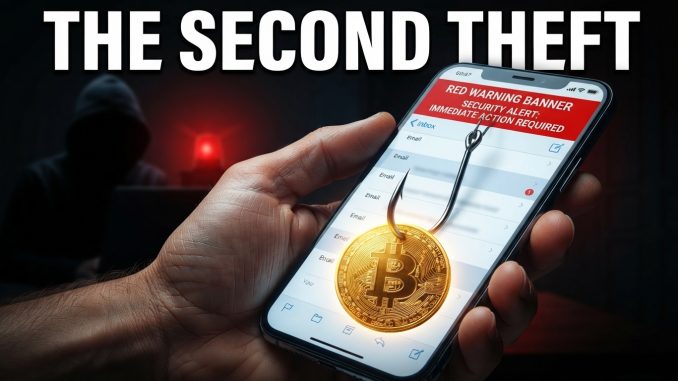
The hackers took about $6.3 billion from Binance on October 29. Now other criminals are going after the people who are worried about their money.
Binance says customers will not pay for the loss. That promise has created a perfect opening. Everyone has heard about the hack, many are waiting for withdrawals, and few know exactly how the recovery works. Scammers need only a believable email.
The email that promises you Bitcoin
On November 1, Bitdefender found emails from a fake “SAFU Reconciliation Desk.” SAFU is the real name of Binance’s emergency fund, which makes the message sound official.
The email says: “Your Bitcoin address has been returned as UNCLAIMED.” It then promises a fixed Bitcoin payout, based on invented tiers. There is one condition. You must first send a “wallet-verification fee” of 0.0042 BTC, worth about $327 when the email went out.
The email adds a case number, a deadline and a queue of 11,400 cases. It even says it needs no seed phrase and no exchange login. That sounds reassuring, but it doesn’t need them. It only needs you to send the Bitcoin yourself.
There is no payout. Once the Bitcoin leaves your wallet, you will usually not get it back.
The wallet warning that was only updated
A second campaign pretends to come from Trust Wallet. It claims that the Binance incident forces all users to verify their wallets, or face suspension after November 7. The button leads toward a page that can steal login details, recovery phrases or a wallet approval.
The revealing part is how little work this took. Bitdefender found an almost identical email from just before the hack. It carried the same threat and an October 26 deadline, but no mention of Binance. The scammers simply added the headline.
The offers aimed at people waiting for withdrawals
Binance has been reopening withdrawals in phases since November 1, and another batch of assets was due to open on November 5. That wait is its own opportunity.
In a November 2 advisory, reported by CryptoSlate, Binance warned about people offering to speed up withdrawals or selling a place in the queue. It also warned about fake compensation links, fake proof-of-reserves sites and requests to move funds to a “secure” wallet.
Binance says it does not charge fees to unlock withdrawals. It says it offers no paid recovery service and will not ask you to authorize a wallet transaction to regain access.
There is no public total yet for what victims of these scams have lost. Don’t let that comfort you. Scam losses often surface long after the messages go out.
Five rules that stop all of these scams
- Never pay to receive money. A real refund does not start with you sending crypto.
- Never click from the message. Open the official app, or type the address yourself.
- Never share your seed phrase. Anyone who has it can empty your wallet.
- Never move funds because someone told you to. The “safe wallet” belongs to the scammer.
- Treat every deadline as a warning. Pressure exists to stop you from checking.
As of October 30, McAfee reported that Binance had announced no claims process. Its advice was clear: you don’t need to pay anyone or move funds to protect a Binance balance. Check the official app for any change.
If you already clicked or paid
Stop replying, and do not send anything more. A second “fee” will not unlock the first one.
Change your exchange and email passwords from a device you trust. If you shared your seed phrase, create a new wallet on a clean device and move what remains. If you connected your wallet to a suspicious site, revoke its permissions.
Then report the transaction through the platform’s official support, and keep the addresses, transaction IDs and messages. Be careful about anyone who offers to get your crypto back for a fee. The FBI has warned that fake law firms target people who have already lost crypto.
The lesson is bigger than Binance
The biggest danger after a hack is often not the hack. It is the message that arrives while you are scared.
Most crypto losses of this kind follow the same pattern: real news, a made-up procedure and a deadline. If anything pushes you to act before you can check, stop there.
CryptoReality publishes independent analysis for information only. Nothing on this site is investment advice. Crypto assets are highly volatile and you can lose all of the money you invest.


